суббота, 15 июня 2013 г.


пятница, 14 июня 2013 г.
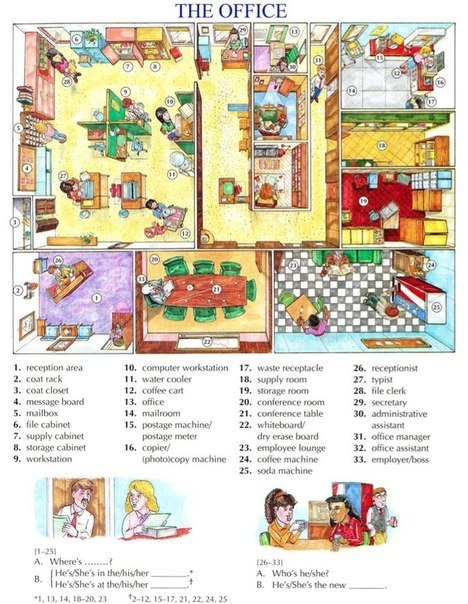

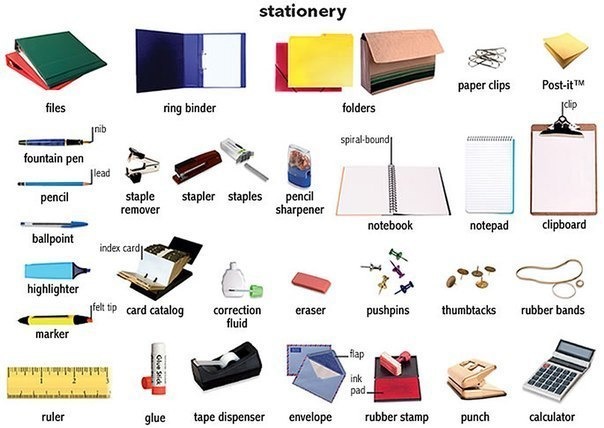
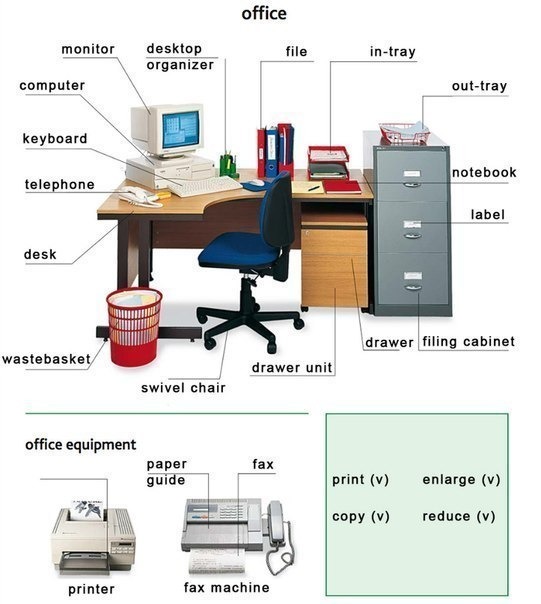
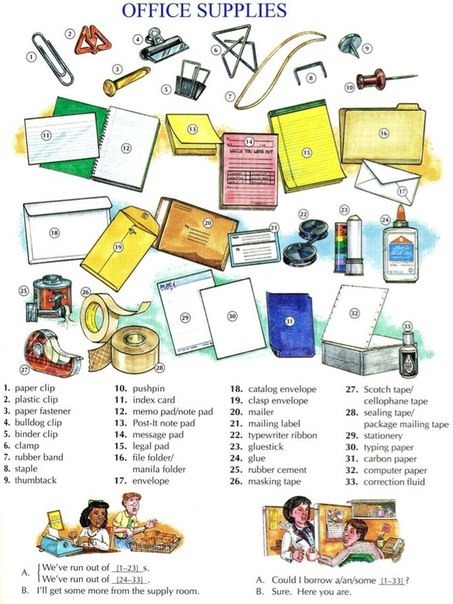

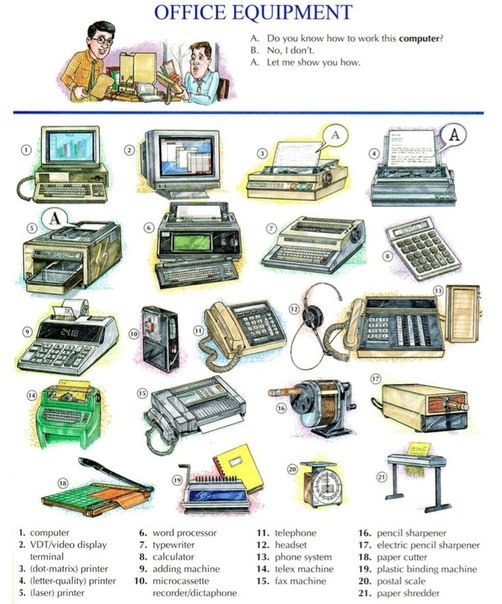
Useful words. Office Supplies
IN THE OFFICE!
a desk - рабочий стол
a chair - стул
a PC (personal computer) - персональный компьютер
a laptop - ноутбук
a monitor (screen)- монитор (экран)
a keyboard - клавиатура
a mouse - мышка
a printer - принтер
files - файлы, документы
a folder - папка (для бумаг)
a notice board - доска объявлений
a briefcase - портфель
drawers - выдвижные ящики
a wastepaper busket - корзина для мусора
a calendar - календарь
a filing cabinet - ящик для файлов, документов
a calculator - калькулятор
a diary - ежедневник
a rubber - ластик
a ruler - линейка
a stapler - степлер
paper clips - скрепки
a copier - ксерокс

Useful words about WORK
Английские слова и выражения на тему «РАБОТА»:


earn one's living – зарабатывать на жизнь
employee – служащий
employer – работодатель, наниматель
job / work – работа
flexitime / flextime – свободный режим рабочего дня, скользящий график
full-time job – работа на полную ставку
get a raise – получить повышение
occupation – род занятий, профессия
part-time job – работа на неполную ставку
pay cut / wage cut – снижение заработной платы
profession – профессия
promotion – продвижение по службе
regular job – постоянная работа
run a firm – руководить фирмой
salary / wages – заработная плата
severance / severance pay – выходное пособие
trade – занятие, ремесло, профессия
work in shifts – работать посменно
worker – рабочий
working hours – рабочие часы
work overtime – работать сверхурочно

Commonly Confused Adjectives with Explanations. Much - Many etc.
Commonly Confused Adjectives with Explanations


▷Many - Much
Although these two quantifiers sound similar, function in a similar manner and mean similar things, they cannot be used interchangeably. Use much with collective nouns and singular nouns. Use many with plural nouns. Here's an example.
Gerald doesn't have much money.
Chelsea doesn't have many friends.
▷Few - A Few
A few represents a positive quantity, but it can only be used with countable nouns. The word few represents a negative quantity or shortage. Here's an example.
Julian has a few friends.
Julian has few friends.
▷Little - A little
Like few and a few, the quantifiers little and a little represent negative and positive quantities. Always use a little with non-countable nouns. The word little expresses a diminutive size or a negative quantity. Here are a few examples.
The kitten is little.
Celeste had little interest in history.
There is a little sauce left.
Would you like a little more?
▷Each - Every
Use each with individual or separate items. Use the word every when referring to things in a group or describing the frequency of actions.
The pineapples are $2 each.
Each student received a handout.
Emily goes to the beach every weekend.
▷Wounded - Injured - Hurt
The words wounded, injured and hurt have subtle differences and unique connotations. Victims are injured financially, emotionally or physically. Wounded implies a physical injury or laceration. Hurt describes an experience of physical or emotional pain.
The child screamed louder than a wounded animal.
The injured player was carried off the field.
Buster's owner was relieved that the small dog wasn't hurt.
▷Farther - Further
Farther (root word far) is always used for distance, and further (think furthermore) implies a metaphorical advancement. Here are a few examples.
How much farther is the amusement park?
Further topics will be covered next week.
▷Less - Fewer
Less is compatible with non-countable nouns, collective nouns, volumes and bulk amounts. Fewer is used with countable nouns and individual items. Here are several examples.
Less pollution is better for the environment.
If people threw out fewer bottles, the world would be cleaner.
▷Last - Latter- Latest
Last is the opposite of first, the latter is the antithesis of the former and the latest means the most recent. Here are several examples.
Read the first and last paragraphs today.
Of the two choices, I prefer the latter.
The latest innovations were astounding.
▷High - Tall
Tall is an adjective that measures the size or height of vertical items, such as people and buildings. High is used to define an object's position from the ground, including bridges, planes, shelves and horizontal objects. Here are two examples.
The Statue of Liberty is very tall.
The Golden Gate Bridge is exceptionally high.
▷Sick - Ill
Sick is related to a sickness or physical condition affecting an individual or group. Ill can mean bad, poor, unwell or sick.
After the roller coaster ride, Charles felt sick.
The expedition was ill advised.
GAMES from LONGMAN
В помощь преподавателям английского языка:


Дорогие коллеги, вносите разнообразие в свои уроки!
Хочу предложить готовые к использованию материалы, которые сделают Ваши уроки незабываемыми и принесут радость лично Вам и, конечно же, Вашим подопечным!
Сборники 'Games' от издательства Longman содержат огромное количество игр, заданий и упражнений, которые станут отличным дополнением к любому уроку:
четверг, 13 июня 2013 г.
Useful expressions. Questions for communication
Вопросительные фразы для ежедневного общения
Get it? - Понимаешь?
What makes you so sure? - Почему ты так уверен?
Are you nuts? - Ты что, ненормальный?
How's that? - Как это можно объяснить?
How come, (that) ...? - Как так получается, что...?
What have I got to do? - А что мне еще остается делать?
What's the use of? - Зачем? / Какой смысл?:
What's the use of worrying? - Какой смысл переживать?
Why worry him? -Зачем его беспокоить?
Подписаться на:
Сообщения (Atom)